
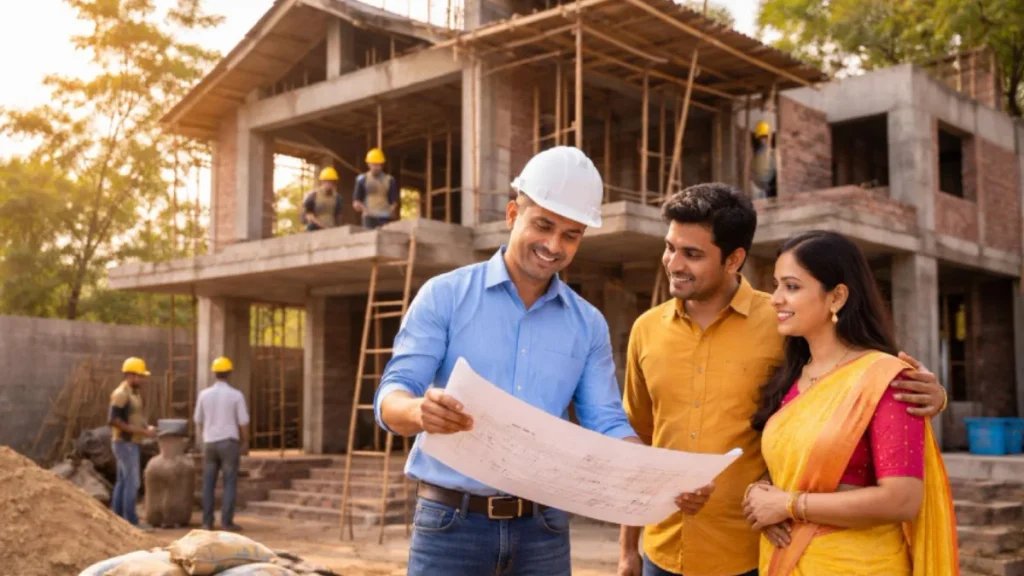
Building your own house is a major milestone. It is also one of the biggest financial commitments a family makes. Every homeowner wants a beautiful, safe and comfortable house within their budget.
However, construction costs can increase unexpectedly. Material prices may change. Design changes may require extra work. Poor planning can lead to delays and additional expenses.
For families planning house construction in Tirunelveli, Tamil Nadu, careful budgeting is essential. A clear plan helps you manage expenses and avoid unnecessary financial stress.
In this guide, we explain how to avoid budget overruns in home construction. You will learn how to estimate costs, select materials, manage contractors and keep your project under control.
Decide Your Total Construction Budget First
The first step is to decide how much you can comfortably spend on your house.
Do not begin construction based only on a rough estimate. Prepare a realistic budget before starting the work.
Your budget should consider the following expenses:
- Land preparation and site clearing.
- Architectural design and structural engineering.
- Building approvals and applicable fees.
- Foundation and structural work.
- Bricks, cement, steel, sand and other materials.
- Plumbing and electrical work.
- Flooring, painting, doors and windows.
- Kitchen, wardrobes and other interior work.
- Water supply, drainage and external development.
- Labour charges and site supervision.
- An emergency fund for unexpected expenses.
Remember that the construction cost is not always the total cost of owning a house. Furniture, appliances, compound walls, gates and landscaping may require separate budgets.
Practical tip: Decide your maximum spending limit before finalising the design. Your house plan should match your financial capacity.
Prepare a Detailed Construction Estimate
A detailed estimate helps you understand where your money will go.
Ask your architect, engineer or construction company to prepare a cost estimate based on the proposed drawings and specifications.
The estimate should explain the quantity, quality and cost of the main materials and work items.
For example, it should identify the proposed flooring type, window material, electrical fittings and sanitary fixtures.
Avoid accepting an estimate that simply states a total price without explaining what is included.
Two contractors may quote different amounts because they offer different materials, specifications or services.
Compare their quotations carefully before making a decision.
What should a construction estimate include?
| Work item | What to check |
|---|---|
| Foundation and structure | Excavation, concrete, steel and structural work |
| Walls and plastering | Wall materials, mortar and finishing |
| Plumbing and electrical | Pipes, wiring, fittings and installation |
| Flooring and painting | Material quality, brands and coverage |
| Doors and windows | Materials, sizes, hardware and installation |
| Approvals and professional fees | Applicable charges and services |
| External work | Drainage, compound wall, paving and other agreed items |
The estimate should also state what is excluded. This prevents disagreements later.
Finalise Your House Design Before Construction
Frequent design changes are a common reason for budget overruns.
Imagine changing the kitchen layout after plumbing work is complete. Pipes may need to be moved. Tiles may need to be removed. Labour and material costs can increase.
Similar problems occur when homeowners change room sizes, staircase positions, windows or electrical points after construction begins.
To avoid these expenses, finalise the important design decisions before work starts.
Confirm the following:
- Number and size of bedrooms.
- Kitchen and bathroom layouts.
- Staircase location.
- Door and window positions.
- Electrical switches and lighting points.
- Plumbing locations.
- Flooring and wall finishes.
- Storage and interior requirements.
Review the drawings carefully with your architect and engineer.
A little extra time during planning can save money during construction.
Keep an Emergency Fund
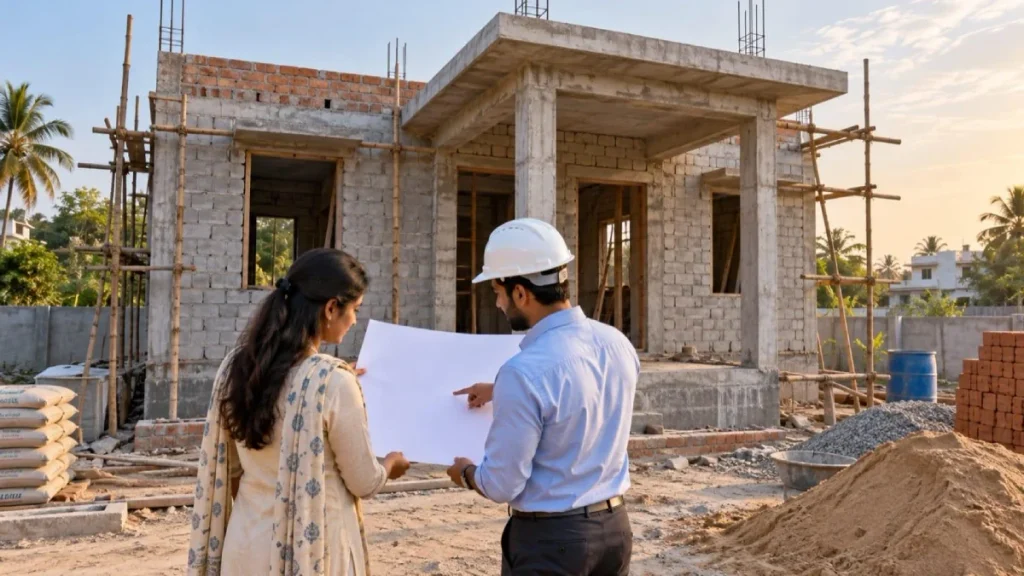
Even a well-planned project can face unexpected expenses.
The soil may require additional preparation. Existing ground conditions may differ from initial assumptions. Material prices may change. Certain repair or drainage requirements may become clear only after work begins.
Keep a separate contingency fund for such situations.
As a planning guideline, many homeowners set aside around 5–10% of the estimated construction budget. This is a general budgeting suggestion, not a guarantee that it will cover every unexpected expense.
For example, if your estimated construction budget is ₹30 lakh, a contingency reserve of ₹1.5 lakh to ₹3 lakh would be 5–10% of that estimate.
Do not treat this reserve as money available for decorative upgrades.
Use it for genuine unforeseen expenses. If you do not need it, the remaining amount stays with you.
Choose Materials Based on Quality and Value
Choosing the cheapest material is not always the best way to save money.
Poor-quality materials may lead to repairs, replacement costs and maintenance problems. However, expensive materials are not automatically better for every application.
Select materials based on their suitability, durability, performance and cost.
For example:
- Choose cement and steel that meet the relevant specifications.
- Select flooring that suits the room and expected usage.
- Use suitable waterproofing systems in bathrooms and terraces.
- Choose energy-efficient lighting where practical.
- Select doors and windows that balance durability, maintenance and price.
- Compare plumbing and electrical products based on quality and warranty.
Ask your engineer or contractor to explain the available options.
For important structural materials, follow the specifications approved by the structural engineer. Do not reduce reinforcement, concrete quality or other safety requirements just to save money.
Smart saving means avoiding waste and unnecessary upgrades. It does not mean compromising structural safety.
Compare Contractor Quotations Carefully
Do not select a contractor based only on the lowest quotation.
A low quote may exclude important work. It may also use different material specifications or leave certain finishing items outside the agreed price.
Ask each contractor to quote against the same drawings and specifications.
Compare:
- Total price and detailed scope of work.
- Materials and brands included.
- Labour and supervision arrangements.
- Payment schedule.
- Project timeline.
- Quality checks.
- Warranty or defect-related commitments, where applicable.
- Additional work and variation charges.
- Exclusions and responsibilities.
Check references and relevant completed projects. If possible, visit a site to understand the quality of work.
Choose a contractor who communicates clearly and provides a written agreement.
A transparent quotation makes it easier to manage your budget throughout the project.
Use a Written Agreement and Stage-Wise Payments
A written construction agreement protects both the homeowner and the contractor.
It should explain the scope of work, specifications, price, payment terms and responsibilities of both parties.
It should also describe how changes to the original plan will be priced and approved.
Avoid making large payments without understanding the work completed and the payment terms.
Where suitable, use a stage-wise payment schedule linked to clearly defined construction milestones.
For example, payments may be linked to agreed stages such as foundation work, structural work, brickwork and finishing. The exact stages should suit the contract and project.
Keep records of payments, invoices, receipts and approved changes.
A clear payment system helps you understand how much you have spent and how much remains.
Track Expenses Every Week
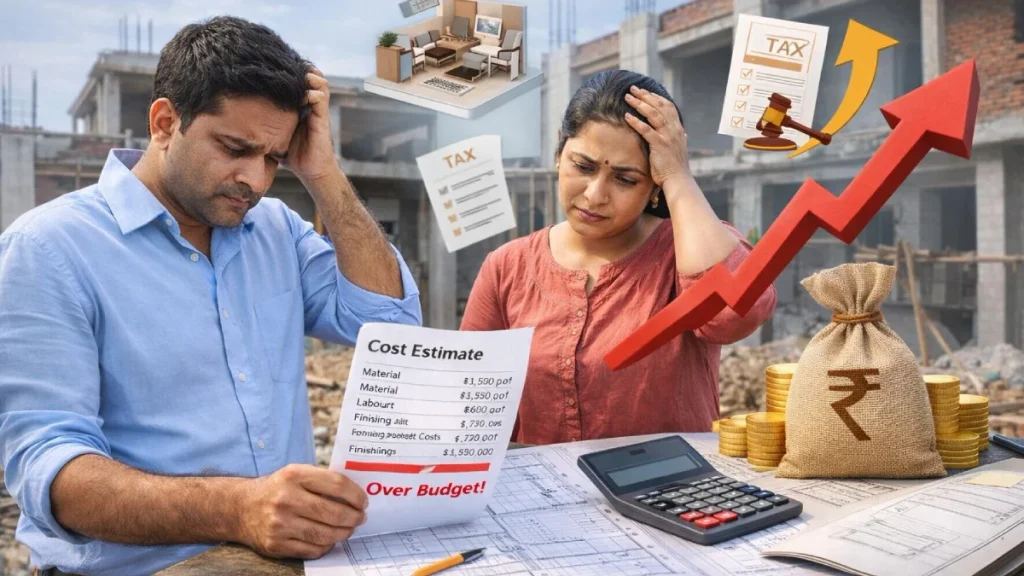
A budget is useful only when you monitor it.
Maintain a simple spreadsheet or notebook to record construction expenses.
Include material purchases, labour charges, contractor payments, professional fees and additional work.
Review the records every week.
Compare the actual spending with the original estimate. Identify areas where costs are increasing faster than expected.
A simple budget tracker can include:
| Expense | Budget | Actual spending | Balance |
|---|---|---|---|
| Structural work | ₹10,00,000 | ₹9,00,000 | ₹1,00,000 |
| Plumbing and electrical | ₹3,00,000 | ₹2,00,000 | ₹1,00,000 |
| Flooring and painting | ₹4,00,000 | ₹1,50,000 | ₹2,50,000 |
Illustrative figures only. These are not construction price estimates for Tirunelveli.
The figures above show why it is important to compare spending with the planned budget. Some work may not yet be complete, so the remaining balance is not necessarily money you can spend elsewhere.
Review expected future payments as well as money already spent.
Avoid Unplanned Upgrades During Construction
It is tempting to add extra features once the house begins to take shape.
You may decide to install premium tiles, decorative ceilings, additional wardrobes or more expensive lighting.
Each change may seem small. Together, these upgrades can significantly increase the total cost.
Before approving an upgrade, ask three questions:
- Is this feature necessary?
- Does it fit within my remaining budget?
- Will it require changes to completed work?
Separate essential requirements from optional improvements.
Essential items include structural safety, waterproofing, reliable electrical systems and proper drainage. Decorative features can often be added later.
Plan for future improvements where practical, but avoid spending money on them before the essential work is funded.
Plan for Tirunelveli’s Local Conditions
Construction planning should consider the actual site and local requirements.
In Tirunelveli, site conditions, seasonal rainfall, water availability, drainage arrangements and access for material delivery may affect the project.
Before starting construction:
- Check soil and foundation requirements with a qualified professional.
- Plan suitable rainwater drainage around the building.
- Consider waterproofing for terraces, bathrooms and other exposed areas.
- Check access for transporting construction materials.
- Confirm water and electricity arrangements for the site.
- Discuss material storage and protection with the contractor.
- Allow for possible weather-related delays in the schedule.
Do not assume every plot has the same soil or drainage conditions. Proper site assessment helps identify potential problems before they become expensive.
Obtain the Required Building Approvals
Building without the required approvals can lead to delays, additional expenses and legal difficulties.
Before construction, check the applicable planning permission and building approval requirements for your property.
The process may depend on the property’s location, building type, size and the authority responsible for the area.
For a project in Tirunelveli, consult the relevant local authority and a qualified professional about the documents, permissions and applicable rules.
Zion Builders Group lists approvals and compliance among its services. You can discuss the requirements for your proposed project with its team.
Do not assume that approval charges or professional fees are included in the construction quotation. Confirm this in writing.
Do Not Compromise on Engineering and Safety
Reducing costs by cutting essential structural work can create serious risks.
Never make unauthorised changes to columns, beams, foundations or reinforcement. Do not reduce specified steel or concrete quantities without approval from the structural engineer.
Similarly, avoid skipping essential waterproofing, electrical safety measures or plumbing work.
Repairs to poorly executed work can cost more than doing it correctly the first time.
Arrange appropriate inspections at important construction stages. Address defects before they become hidden behind plaster, flooring or other finishes.
A safe and durable house offers better long-term value than a cheaper building that requires frequent repairs.
Keep a Monthly Budget Review
In addition to weekly expense tracking, review the overall project once a month.
Check the following:
- Total budget approved at the beginning.
- Total money spent so far.
- Value of work completed.
- Payments due in the coming weeks.
- Expected cost of unfinished work.
- Remaining contingency reserve.
- Approved changes to the original plan.
Ask your contractor to explain any major difference between the planned and actual spending.
If costs are increasing, take action early. You may be able to revise non-essential finishes, reduce material waste or improve work scheduling without affecting safety.
Do not wait until the final stage to discover that the budget has been exceeded.
Frequently Asked Questions
1. How can I avoid budget overruns in home construction?
Start with a realistic budget, prepare a detailed estimate, finalise the design and use a written construction agreement. Track expenses regularly and keep a contingency fund for unexpected costs.
2. How much extra money should I keep for unexpected construction expenses?
A general planning guideline is 5–10% of the estimated construction budget. The suitable amount depends on the site’s condition, design complexity and uncertainty in the project.
3. Why does house construction cost more than the original estimate?
Costs may increase because of design changes, incomplete quotations, material price changes, site problems, delays, additional work or poor expense tracking.
4. Is the cheapest construction contractor the best choice?
Not necessarily. Compare the scope of work, material specifications, quality, payment terms and exclusions. A clear, complete quotation is more useful than a low price alone.
5. How can I reduce house construction costs without affecting quality?
Finalise the design early, choose practical materials, avoid unnecessary changes, reduce material waste and plan work properly. Never compromise on structural safety or essential building requirements.
6. Do building approvals affect the construction budget?
Yes. Applicable approval charges, professional fees and compliance requirements should be considered before construction begins. Requirements vary according to the property and relevant local authority.
7. Can a construction company help me stay within my budget?
A well-managed construction company can help through detailed estimates, material planning, site supervision, quality checks and regular expense reviews. However, cost control also depends on clear decisions, agreed specifications and timely communication.
Conclusion
Avoiding budget overruns begins long before the first brick is laid.
Prepare a realistic budget, finalise your house design, compare quotations and agree on the scope of work in writing. Track expenses regularly and maintain an emergency reserve.
Most importantly, save money through good planning rather than by compromising on structural safety or construction quality.
If you are planning to build a house in Tirunelveli or the surrounding areas, professional guidance can help you make informed decisions from the design stage to final handover.
Planning to build your dream home? Contact Zion Builders Group to discuss your requirements, construction budget and project planning needs. A clear plan is the first step towards building a home with confidence.